Штучний інтелект у морській галузі: чи замінить він моряків? | Astra Crew морський рекрутинг
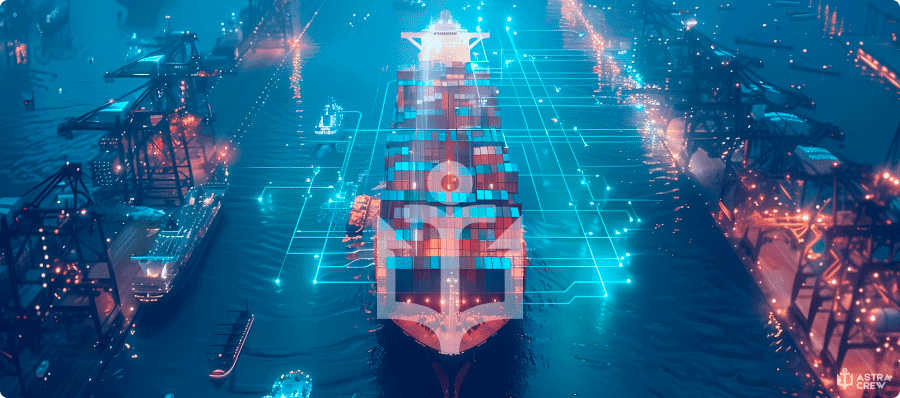
Artificial intelligence (AI) is actively transforming the maritime industry, being implemented in all areas of shipping. From autonomous vessels to predictive maintenance and port operation optimization, AI is changing traditional processes. For seafarers and companies involved in maritime recruitment, these changes create new opportunities and challenges.
Modern AI systems allow the analysis of vast amounts of data, predict the efficiency of ship operations, and improve safety at sea. However, despite the active adoption of technology, the human factor remains critically important, and the role of seafarers is irreplaceable.
AI in Shipping: New Opportunities and Development Directions
Autonomous Vessels and Intelligent Navigation
AI has become a key tool in the development of autonomous ships and intelligent navigation systems. These systems analyze data from radars, GPS, and other sensors, determining optimal routes and speeds. This helps reduce fuel consumption, minimize errors, and increase transport safety.
AI is also used to forecast weather conditions, wave heights, and sea currents, allowing captains and shipowners to adjust routes in advance and minimize delays.
Predictive Maintenance and Equipment Management
AI systems help shipowners predict maintenance needs. By analyzing the condition of engines, generators, and navigation equipment, preventive maintenance can be planned, avoiding costly downtime.
The use of AI reduces the risk of accidents, optimizes maintenance costs, and extends the lifespan of ship equipment. For recruiters, this is also important: crews receive more stable working conditions, and companies get reliable ship operations.
Port Operations Optimization
AI is being implemented in port operations as well. Systems plan berth allocations, loading and unloading schedules, and monitor vessel logistics in the port. This reduces waiting times, increases port throughput, and minimizes delays in the supply chain. For recruiters and maritime agencies, efficient port operations mean that seafarers work in optimal conditions, and companies can improve crew planning.
The Role of Seafarers in the AI Era
Despite the active adoption of technology, the role of seafarers remains key. The human factor is necessary for strategic decision-making, managing critical situations, and ensuring safety on board.
AI can perform routine tasks such as sensor monitoring or route calculation, but it cannot replace the intuition, experience, and leadership qualities of a seafarer. Professionals with management skills, technical expertise, and adaptability will always be in demand, regardless of the level of ship automation.
AI development also opens new opportunities for seafarer training. Companies can use AI-based simulators and training programs to improve crew qualifications and prepare them for work on modern vessels.
Artificial Intelligence in Maritime Recruitment
AI is actively applied in the seafarer recruitment process. Systems analyze resumes, verify experience and qualifications, assess candidates’ fit for positions, and predict their success on board.
This approach speeds up hiring, reduces human error, and improves crew selection accuracy. For maritime recruitment companies, this means shorter search times and higher-quality candidate selection.
Additionally, AI helps companies analyze the labor market, identify skill shortages, and forecast demand for certain competencies. This allows maritime agencies to prepare databases of qualified specialists in advance and offer clients optimal solutions.
AI Prospects in the Maritime Industry
By 2025, AI will play an increasingly important role in the maritime industry. Full automation of shipping is unlikely, but AI integration into existing processes will become standard. Humans and machines will work together, with AI performing routine tasks while seafarers make strategic decisions and manage complex situations.
For maritime recruiters, this means the need to consider new technologies when selecting specialists, develop AI-related skills, and offer clients modern crew management solutions.
Conclusion
Artificial intelligence is changing the maritime industry by optimizing operations and enhancing vessel safety. However, the human factor remains irreplaceable. Experienced, professional, and leadership-capable seafarers will always be in demand, and AI integration creates new opportunities for training, recruitment, and crew management.
Maritime recruitment and specialist selection become more efficient thanks to technology, and companies can optimize ship and port operations. AI integration is a pathway to improving maritime transport quality and safety at sea.
👉 Discover new career paths, compare offers, and apply for relevant positions directly on our platform.