Greece Seafarers’ Strike Triggered by Middle East Escalation and Rising Risks to Civilian Shipping and Crew Safety
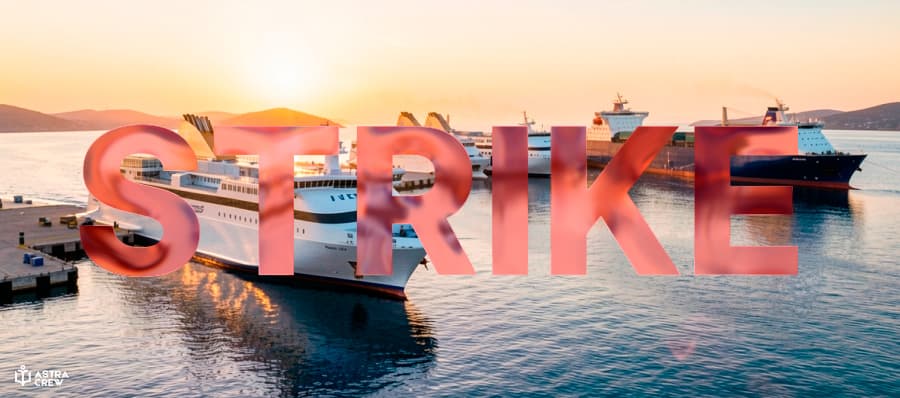
On Thursday, March 5, 2026, maritime transport across Greece will effectively come to a halt due to a 24-hour nationwide strike announced by the Panhellenic Seamen’s Federation (PNO). Throughout the day, ferries and other vessels will remain docked at ports nationwide, and most routes between the mainland and the islands are expected to be cancelled or shifted to later dates.
According to the federation’s decision, the strike will begin at 00:01 on March 5 and will end at 24:00 on the same day. The action applies to all categories of vessels, meaning the disruption may affect not only passenger ferry services but also parts of maritime logistics, where operations depend on crew availability and port-side procedures.
PNO says the strike is being called in response to the escalation in the Middle East and the related risks to civilian shipping and crew safety. The federation describes the situation as serious and potentially dangerous, stressing that hundreds of seafarers, including Greek nationals, remain in the wider region and continue working under heightened risk conditions.
In its public statement, PNO sets out demands focused on immediate measures to protect crews. The federation calls for the evacuation of seafarers located in the designated risk zone, for the area to be formally declared unsafe for vessel calls, and for action by the Ministry of Maritime Affairs and Insular Policy regarding cadets serving on board ships who are unable to return to their studies within normal timelines. PNO also underlines its position that vessels should not depart Greece toward the region until safety conditions change.
Greek authorities have also publicly referenced figures regarding Greek-flagged vessels and Greek seafarers in and around the Persian Gulf and the wider area. Official statements have indicated that ten Greek-flagged ships are in the Persian Gulf with eighty-five Greek seafarers on board, that five additional ships are positioned outside the immediate Gulf zone, and that a large number of vessels linked to Greek interests are present in the broader region while operating under foreign flags.
Passengers planning sea travel on March 5 should note that sailings are generally not operated during a strike, and that timetables may take time to normalize after the action ends due to accumulated rescheduling. In practical terms, this means knock-on disruptions may extend into March 6, especially on high-demand routes with limited daily departures. Travelers are advised to check the latest status with their operator and avoid heading to the port without confirmation, as updates may vary by route and can change during the day.
For businesses and logistics, the suspension of sailings may lead to delays in shipments to and from the islands and shifts in receiving and dispatch schedules. Companies that rely on maritime transport typically adjust delivery plans in advance and inform customers about potential postponements in order to reduce operational disruption over the following days.