Piraeus: Historical Port and Modern Maritime Logistics Hub | Astra Crew Maritime Recruitment
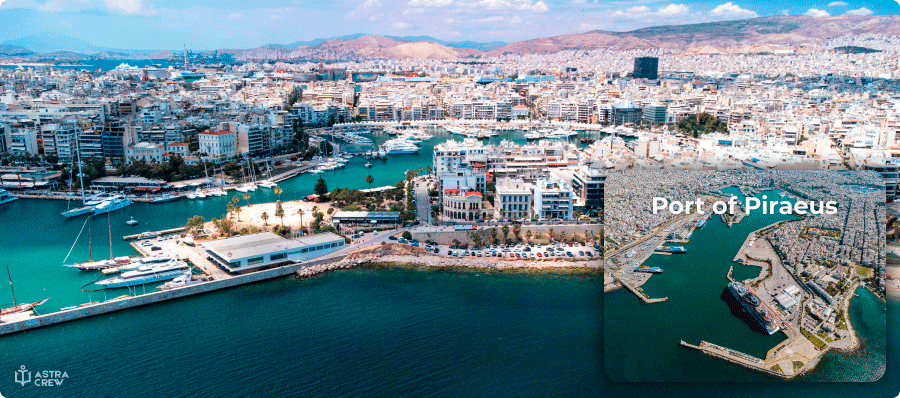
Piraeus is the largest port in Greece and one of the most important maritime centers in the Mediterranean.
Its strategic location makes it a key hub for international trade, passenger transportation, and shipping companies. For sailors, shipowners, and maritime agencies, Piraeus is a critical point for route planning, logistics, and coordination with port authorities, as many regional shipping routes begin and end here.
History and Significance of Piraeus
Piraeus has existed for over 2,500 years and was historically considered the main maritime gateway of Athens. Since ancient Greek times, the port has served as a center of trade and defense, providing reliable connections to other Mediterranean regions. Today, Piraeus combines rich historical heritage with modern infrastructure, including cargo terminals, passenger docks, and service areas for ships.
The port efficiently handles large volumes of cargo and containers, while also supporting a well-developed cruise and ferry system. Shipping companies and shipowners value Piraeus for its modern technical facilities, fast document processing for crews and vessels, and its extensive logistics network, making it a vital component of international trade.
Logistics and Maritime Services
Piraeus is more than just a port; it is a maritime logistics hub connecting Greece to Europe, Asia, and Africa. The port features container terminals for international trade, specialized areas for oil and chemical cargo, as well as terminals for cruise ships and passenger ferries. Additionally, the port provides a wide range of technical support services for vessels, making it suitable for all ship types, from cargo container ships to cruise liners.
For seafarers and companies, Piraeus is a strategic port where routes can be planned considering weather and dock availability, crew and vessel documents can be processed quickly, and essential supply and service needs can be met. Modern port management technologies and professional staff ensure minimal delays and optimize all maritime operations.
Importance of Piraeus for the Maritime Industry
Piraeus is crucial not only for cargo transport but also for the cruise business. Shipping companies and travel agencies consider the port as a departure and arrival point for thousands of passengers every year. Convenient logistics, warehouse availability, service companies, and agency offices make Piraeus a reliable partner for maritime professionals and shipowners.
For seafarers, Piraeus offers qualified assistance with document processing, visas, and contracts. Experienced maritime agents help crews resolve complex issues on-site, preventing delays and financial losses. This makes the port not only a transit point but also a place where maritime companies can confidently plan the operations of their ships and crews.
Recommendations for Seafarers and Companies
To operate effectively in Piraeus, it is important to plan routes in advance and consider port congestion. Working with reliable maritime agents and brokers helps optimize logistics and reduce risks. It is also essential to prepare all necessary documents and permits in advance to avoid delays and bureaucratic issues. Companies and crews should check the availability of service and warehouse facilities for their cargo and vessels and stay updated on port regulations and safety requirements.
Following these recommendations ensures efficient and safe operations in Piraeus, increases reliability, and provides stability for maritime companies.
Conclusion
Piraeus is a historical port with a rich heritage and a modern maritime hub with advanced infrastructure that ensures smooth operations for shipowners, maritime companies, and crews. Its logistics, services, and professional maritime agents make it strategically important for international trade and the maritime industry. Astra Crew supports sailors and companies by providing document handling, logistics, and port coordination services, guaranteeing safety and confidence on every voyage.