MLC 2006: What Every Seafarer and Maritime Company Should Know | Astra Crew Maritime Recruitment
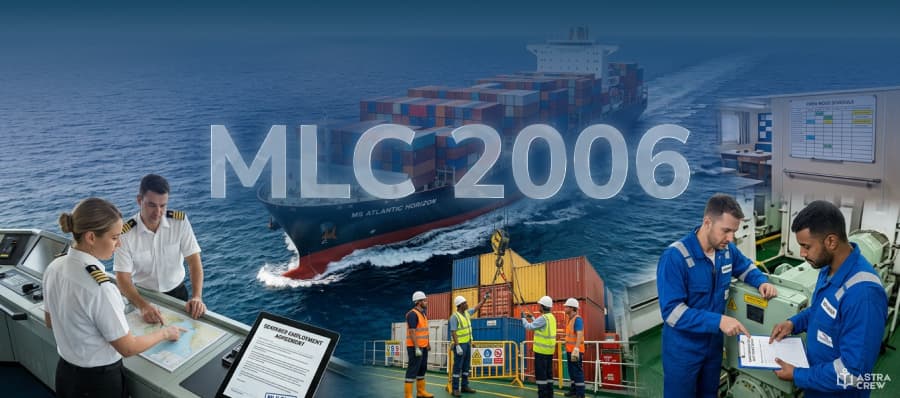
The maritime industry is regulated by a number of international conventions that establish standards for safety, crew training, and working conditions on board ships. One of the most important conventions that directly affects the lives of seafarers and the work of maritime companies is MLC 2006 — the Maritime Labour Convention. This convention sets international standards for seafarers’ working conditions, their rights, and the responsibilities of employers. MLC 2006 is often called the “seafarers’ bill of rights” because it combines the main requirements for working conditions, accommodation, medical care, and social protection for seafarers. Today, the requirements of MLC 2006 apply to almost all commercial ships operating on international voyages and are mandatory for most countries involved in the global maritime industry.
What Is MLC 2006
MLC 2006, or the Maritime Labour Convention 2006, is an international convention adopted by the International Labour Organization (ILO) that establishes minimum standards for working and living conditions for seafarers worldwide. The convention was adopted in 2006 and entered into force in 2013. It consolidated more than sixty international agreements related to seafarers’ labour rights. Since its implementation, the convention has also been updated and amended to reflect modern developments in the maritime industry. The main purpose of MLC 2006 is to ensure decent working conditions for seafarers regardless of the flag of the vessel they work on. The convention establishes unified international rules that maritime companies must follow in order to provide transparent employment conditions and protect the rights of crew members.
Why MLC 2006 Is One of the Most Important Conventions in the Maritime Industry
MLC 2006 plays a unique role in the maritime industry because it regulates not only formal labour relations but also the real living and working conditions of seafarers on board ships. Unlike conventions that focus mainly on technical safety or environmental protection, the Maritime Labour Convention focuses on people — their rights, health, rest hours, wages, and social protection. For this reason, MLC 2006 is important not only for seafarers but also for shipowners, fleet operators, crewing agencies, and maritime companies working in international shipping. For the maritime recruitment sector, the convention is particularly important because it directly influences employment conditions, transparency of contracts, and the quality of crew recruitment.
What Rights of Seafarers Are Protected by MLC 2006
MLC 2006 establishes fundamental rights for seafarers and sets requirements for their working conditions on board ships. The convention regulates many aspects of seafarers’ professional activity, including employment contracts, payment of wages, working hours and rest hours, accommodation standards, medical care, food quality, and the right to repatriation after the completion of a contract. These rules help prevent the exploitation of seafarers and create unified standards for working conditions across the global maritime industry. For seafarers, this means more transparent employment conditions, protection of their rights, and the opportunity to work in a safer and more regulated working environment. For maritime companies, it means operating within clear international regulations and building recruitment processes that comply with international labour standards.
Seafarer Employment Contracts and MLC Requirements
One of the key elements of MLC 2006 is the regulation of seafarer employment contracts. Every seafarer must have an official contract known as a Seafarer Employment Agreement (SEA). This document defines the main terms of employment on board the vessel, including position, salary, contract duration, duties of the seafarer, and conditions for termination of employment. The contract must also include information about the seafarer’s right to repatriation after the completion of the voyage. Maritime companies are required to provide seafarers with a copy of the contract and ensure full transparency of employment conditions. A properly structured employment contract protects seafarers and helps prevent disputes between crew members and employers. For maritime companies, transparent contracts are an essential part of MLC compliance and professional crew management.
Working Hours and Rest Hours for Seafarers
One of the key goals of MLC 2006 is to prevent crew fatigue, which can lead to accidents and operational incidents at sea. The convention sets minimum standards for rest hours. In most cases, seafarers must receive at least ten hours of rest within a 24-hour period and no less than seventy-seven hours of rest within a seven-day period. These rules help maintain safe working conditions on board and reduce risks associated with fatigue and excessive workloads. Ships are required to maintain official records of working hours and rest hours, which may be checked during inspections.
Living Conditions on Board Ships
MLC 2006 also establishes requirements for accommodation standards on board ships. Crew cabins, sanitary facilities, ventilation, and lighting must meet established standards. The convention also regulates requirements for galleys, food storage, and the quality of meals provided to the crew. Seafarers must have access to clean drinking water and proper nutrition during their voyage. These standards ensure that crew members live in acceptable conditions during long voyages and contribute to their overall well-being and performance.
Medical Care for Seafarers
The convention requires that seafarers have access to medical care both on board ships and ashore. Ships must carry medical supplies, first aid equipment, and trained personnel capable of providing basic medical assistance. Seafarers must also be able to receive medical treatment in ports if necessary. Access to medical care is an essential part of seafarer welfare and one of the key components of the MLC 2006 standards.
MLC Inspections and Ship Compliance
Compliance with MLC 2006 requirements is monitored through different types of inspections. Inspections may be carried out by the flag state of the vessel, classification societies, or Port State Control inspectors. During these inspections, authorities may verify seafarer employment agreements, accommodation standards, records of working and rest hours, and other elements related to crew welfare and labour conditions. If serious violations are identified, the vessel may receive deficiencies or even be detained until the problems are resolved. For maritime companies, MLC compliance is therefore an important part of international maritime regulation and operational risk management. For seafarers, inspections provide an additional mechanism for protecting their labour rights.
Why MLC 2006 Is Important for Maritime Companies
MLC 2006 is not only important for seafarers but also for maritime companies. The convention establishes clear international rules for organizing work on board ships. For companies, this means complying with requirements related to crew contracts, accommodation standards, wage payments, and medical support for seafarers. Failure to comply with MLC requirements can lead to inspection deficiencies, additional audits, or even vessel detention in port. In addition, compliance with MLC standards helps maritime companies maintain a strong reputation, reduce crew turnover, and attract qualified seafarers. Companies that provide transparent working conditions and follow international labour standards usually build more stable and efficient crews, which is especially important in the competitive global maritime recruitment market.
How MLC 2006 Influences Maritime Recruitment
MLC 2006 directly affects maritime recruitment because modern seafarers increasingly pay attention not only to salary but also to transparent contracts, living conditions on board, compliance with rest hours, and the reputation of the employer. Maritime companies that operate in accordance with international labour standards and build recruitment processes around MLC compliance gain greater trust from seafarers and can attract experienced professionals more easily. For the maritime recruitment sector, understanding labour standards, crew welfare requirements, and international regulations has become a fundamental part of professional crew management.
Astra Crew and Modern Maritime Recruitment
Astra Crew helps seafarers and maritime companies work within modern international maritime recruitment standards. Through Astra Crew, seafarers can find job opportunities with international maritime companies, while employers gain access to verified candidates from different countries around the world. Using a modern digital maritime recruitment platform helps companies find qualified seafarers faster, simplifies the crew recruitment process, and increases transparency in hiring. For seafarers, it means easier access to international maritime employment and the opportunity to work with companies that follow international labour standards such as MLC 2006. For maritime companies, Astra Crew supports efficient crew recruitment, access to a global candidate pool, and stronger HR processes aligned with international maritime regulations. Astra Crew connects seafarers and maritime companies on a single platform, helping improve crew recruitment, maritime recruitment processes, and crew management in accordance with modern maritime labour standards.
Conclusion
MLC 2006 plays a crucial role in the modern maritime industry. The convention protects seafarers’ rights and establishes international standards for working conditions, accommodation, medical care, and crew welfare on board ships. At the same time, it helps maritime companies create transparent and safe working environments that reduce operational risks and improve fleet performance. Understanding the requirements of the Maritime Labour Convention is important for both seafarers and employers in the maritime sector. Knowledge of MLC standards allows seafarers to better understand their rights, contract conditions, and working environment on board ships. For maritime companies, compliance with MLC requirements is a key part of international maritime regulation and directly influences vessel safety, inspection results, and crew stability. Astra Crew helps seafarers and maritime companies operate within modern maritime recruitment standards, connecting professionals and employers through a global digital platform. By supporting transparent contracts, professional crew recruitment, and international maritime employment standards, Astra Crew contributes to safer ships, stronger crews, and a more efficient global maritime industry.
FAQ: Frequently Asked Questions About MLC 2006
What does MLC 2006 mean
MLC 2006 stands for the Maritime Labour Convention 2006. It is an international convention adopted by the International Labour Organization that sets minimum standards for the working and living conditions of seafarers.
Who does MLC 2006 apply to
MLC 2006 applies to most commercial ships engaged in international voyages, as well as to seafarers and maritime companies operating in international shipping.
What does MLC 2006 regulate
MLC 2006 regulates seafarer employment agreements, payment of wages, working hours and rest hours, accommodation standards, food and catering, medical care, and the right to repatriation.
Why is MLC 2006 important for seafarers
MLC 2006 protects seafarers’ labour rights, improves working and living conditions on board ships, and establishes international standards for crew welfare and employment.
Why is MLC 2006 important for maritime companies
Compliance with MLC 2006 helps maritime companies reduce operational risks, improve inspection results, strengthen employer reputation, and support professional crew management.
How is MLC 2006 checked on ships
Compliance with MLC 2006 is verified during inspections carried out by flag states, classification societies, and Port State Control inspectors. These inspections may include checking contracts, rest hour records, accommodation, and other crew welfare conditions.
Can a ship be detained because of MLC 2006 violations
Yes. Serious violations of MLC 2006 may lead to deficiencies, additional inspections, or even vessel detention until the problems are corrected.
How does Astra Crew relate to MLC 2006
Astra Crew supports modern maritime recruitment by helping seafarers and maritime companies connect through a transparent digital platform. This approach supports professional crew recruitment and alignment with international labour standards such as MLC 2006.