How Port State Control Works: Inspections and Preparation | Astra Crew Maritime Recruitment
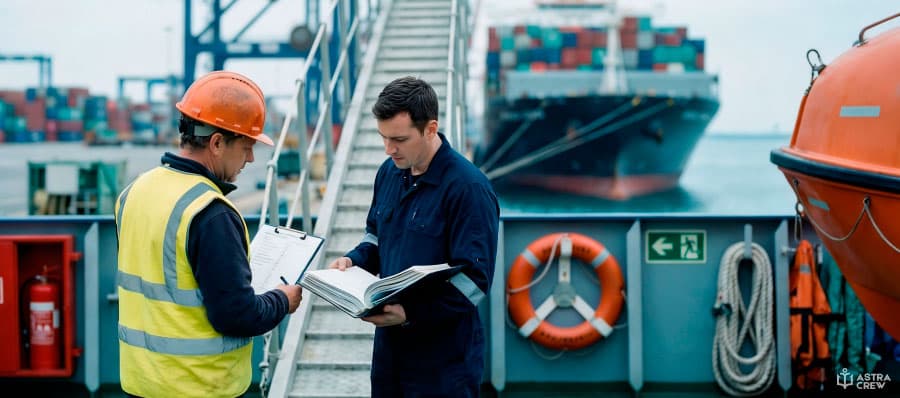
Port State Control, commonly referred to as PSC, is an international inspection system designed to ensure that foreign ships visiting a port comply with global maritime safety, environmental, and labor standards. For seafarers and shipping companies, a PSC inspection can either be a routine procedure or a serious operational challenge if the vessel is not properly prepared. Understanding how Port State Control works and what is checked during a PSC inspection is essential for avoiding vessel detention and protecting a company’s reputation.
What Is Port State Control and Why It Exists
Port State Control is a mechanism that allows maritime authorities of a port state to inspect foreign vessels entering their ports. The purpose of PSC is to eliminate substandard ships from international waters and to enforce compliance with international maritime conventions.
PSC inspections are conducted under frameworks such as SOLAS, MARPOL, STCW, and MLC 2006. These conventions regulate ship safety, pollution prevention, crew certification, working conditions, and overall maritime safety compliance. Through this system, port states can verify that ships flying foreign flags meet the same standards required internationally.
Ships are selected for inspection based on risk profiles, flag performance, detention history, and company records. Vessels with a history of deficiencies are more likely to undergo a detailed PSC inspection.
How a PSC Inspection Is Conducted
A PSC inspection typically begins when a Port State Control officer boards the vessel. The process usually starts with document verification. The inspector checks the validity of ship certificates, safety documentation, and crew certificates.
If documentation appears in order and no visible deficiencies are detected, the inspection may remain limited. However, if inconsistencies or concerns arise, the inspection can expand into a more detailed examination of equipment, operational procedures, and onboard conditions.
A PSC inspection may last a few hours for minor checks or extend over several days if serious deficiencies are discovered.
Documents Checked During Port State Control
One of the primary focuses of Port State Control is documentation. Inspectors review statutory certificates, including the Safety Construction Certificate, Safety Equipment Certificate, Safety Radio Certificate, International Oil Pollution Prevention Certificate, and the International Ship Security Certificate.
They also examine the ship’s Safety Management System under the ISM Code, drill records, logbooks, oil record books, garbage record books, and maintenance documentation. Accuracy and consistency between recorded entries and actual conditions onboard are critical.
Crew documents are equally important. Inspectors verify certificates of competency, endorsements, medical certificates, and compliance with STCW requirements. Under MLC 2006, inspectors may also request seafarer employment agreements, wage payment records, and working and rest hour logs.
Deficiencies in documentation are one of the most common reasons for expanding a PSC inspection.
What Inspectors Check Onboard
Beyond documentation, PSC inspections involve a physical examination of the vessel. Inspectors evaluate the condition and operational readiness of lifesaving appliances, including lifeboats, life rafts, immersion suits, and launching arrangements.
Fire safety systems are a major focus. Fire detection systems, fire pumps, emergency generators, fire doors, and fixed firefighting installations must be fully operational. Inspectors may request demonstration of equipment functionality.
Navigation equipment, steering gear systems, emergency lighting, alarms, and engine room conditions are also reviewed. Oil leaks, poorly maintained machinery, or malfunctioning pollution prevention systems can result in deficiencies.
Maritime safety compliance depends not only on functional equipment but also on the crew’s ability to operate it correctly. Inspectors may request drills or ask officers to explain emergency procedures.
MLC 2006 and Seafarers’ Working Conditions
Port State Control also covers compliance with the Maritime Labour Convention 2006. MLC inspections ensure that seafarers’ rights and welfare standards are respected.
Inspectors may examine crew accommodation, galley hygiene, food storage, ventilation systems, and sanitary facilities. They verify working hours, rest hour records, timely payment of wages, medical care availability, and insurance coverage.
Failure to comply with MLC 2006 requirements can lead to serious consequences, including vessel detention if conditions are deemed unacceptable.
Reasons for Vessel Detention
Vessel detention is the most serious outcome of a PSC inspection. A ship may be detained if deficiencies pose an immediate threat to safety, health, or the environment.
Common reasons for detention include inoperative lifesaving appliances, critical fire safety failures, invalid ship certificates, major structural deficiencies, severe oil leakage, non-compliance with STCW certification requirements, or serious violations of MLC 2006 standards.
A detained vessel cannot leave port until deficiencies are corrected and re-inspected. This results in financial losses, charter party disputes, reputational damage, and increased risk profile for future inspections.
How to Prepare for a PSC Inspection
Preparing for a PSC inspection should be a continuous process rather than a last-minute reaction before entering port. Ships must maintain constant readiness.
Regular internal audits, systematic maintenance routines, and accurate record-keeping are fundamental. All ship certificates must be valid and readily available. Logbooks and operational records must reflect actual onboard conditions.
Crew members should be familiar with emergency procedures and capable of demonstrating equipment operation. Conducting regular drills and ensuring proper training significantly reduces inspection risk.
Maintenance of lifesaving and firefighting equipment should follow manufacturer schedules and company safety management procedures. Small technical issues that go unnoticed can escalate into serious deficiencies during inspection.
Proper preparation for PSC inspection minimizes operational disruptions and strengthens maritime safety performance.
The Role of Crew in Successful PSC Outcomes
Every crew member contributes to the success of a Port State Control inspection. Officers must be prepared to answer questions confidently and demonstrate knowledge of safety procedures. Engineers must ensure machinery spaces are clean and systems operate correctly.
Professional behavior, discipline, and organized documentation create a positive impression. In many cases, well-prepared crews prevent minor issues from becoming formal deficiencies.
PSC inspections evaluate not only equipment condition but also overall safety culture onboard.
Conclusion
Port State Control plays a critical role in maintaining global maritime safety standards. A PSC inspection covers ship documentation, equipment functionality, pollution prevention systems, and compliance with international conventions such as SOLAS, MARPOL, STCW, and MLC 2006.
Understanding how Port State Control works and how to prepare for PSC inspection helps shipping companies reduce risks, avoid vessel detention, and maintain operational efficiency.
For maritime professionals seeking career growth in companies that prioritize safety and compliance, Astra Crew provides access to verified maritime job opportunities worldwide.
Explore available maritime vacancies and advance your career today:
https://astra-crew.com/vacancies